Introduction
When Ducati motorcycles are equipped with ABS, the braking system incorporates an ABS hydraulic control unit, a pump, and solenoid valves. Consequently, the internal hydraulic circuitry is more complex than that of a conventional braking system.
So, is it necessary to perform periodic ABS system bleeding on Ducati motorcycles?
In short: while it is not necessary to specifically activate the ABS pump for bleeding during every routine service, the procedure—following the specific model's service guidelines—may be required if air has entered the braking system, if hydraulic components have been removed, or if the brake lever feel remains spongy after standard bleeding.
For some Ducati models, brake fluid replacement and bleeding can be performed using conventional methods; in other cases, a compatible Ducati diagnostic tool is required to activate the ABS pump and solenoid valves to purge air trapped within the ABS control unit.
What is the Ducati ABS bleeding procedure?
The primary purpose of the ABS bleeding procedure is to purge air from the hydraulic braking system.
Under normal conditions, brake fluid is virtually incompressible. When the rider engages the front brake lever or rear brake pedal, pressure is transmitted through the brake fluid to the brake calipers.
If air is present in the hydraulic lines, its compressibility can lead to issues such as:
• A "spongy" or soft feel at the brake lever or pedal
• Noticeably increased lever travel
• The need for repeated actuation to build braking force
• Sluggish braking response
• Inconsistent braking force between the front and rear wheels
• Failure to restore proper feel after a brake fluid change
• Abnormalities following ABS system maintenance
The "ABS bleeding" process typically consists of two parts:
1. Conventional bleeding of the master cylinder, brake lines, and calipers;
2. Activating the ABS pump and solenoid valves when necessary to circulate brake fluid within the ABS control unit, thereby releasing air trapped in the internal hydraulic circuits.
Do all Ducati motorcycles require a diagnostic tool to bleed the ABS system?
Not necessarily.
Whether a diagnostic tool is required depends on:
• The Ducati model and model year
• The specific ABS control unit installed
• Whether air has entered the ABS hydraulic module
• Whether brake lines or ABS components have been removed or disconnected
• The bleeding procedure specified in the model's service manual
• Whether normal brake feel is restored after standard bleeding
Some Ducati service documentation indicates that if the brakes feel spongy due to air in the system, a standard bleed—following the procedure for front and rear brake fluid replacement—can be performed first. Certain procedures also require specific handling of the caliper pistons and master cylinder to help move air trapped near the ABS control unit to a position where it can be bled out.
This means that the presence of ABS on a motorcycle does not automatically necessitate the use of a diagnostic tool to activate the ABS pump every time the brake fluid is changed.
However, if air has entered the internal ABS circuit, or if the service procedure explicitly mandates an automatic ABS bleed, using only the caliper bleed screws may not be sufficient to fully restore normal brake feel.
Requirements vary by model; always refer to the Ducati owner's manual or service documentation specific to the vehicle's model year.
When is it necessary to check for air in the ABS system or perform an ABS bleed?
1.Brake lever or pedal feels consistently spongy
If the front brake lever can be easily pulled close to the handlebar, or the rear brake pedal has noticeably increased travel, there may be air in the brake hydraulic circuit.
However, a spongy brake feel can also be caused by other issues, such as:
• Aged brake fluid
• Brake hose expansion
• Master cylinder or caliper seal issues
• Abnormal caliper piston retraction
• Brake disc runout
• Brake pad installation or wear issues
Therefore, the entire braking system should be inspected first rather than immediately assuming there is air in the ABS module.
2. Brake lines have been replaced or disconnected
Air can easily enter the hydraulic circuit when replacing brake hoses, the master cylinder, the caliper, or ABS-related lines.
If the system has been drained, conventional bleeding may not be sufficient to remove all air from inside the ABS control unit. In this case, consult the service manual to determine if activation of the ABS pump and solenoid valves is required.
3. ABS control unit removed or replaced
After replacing the ABS hydraulic control unit, refilling and bleeding must be performed strictly according to the specific vehicle's service procedures.
Do not arbitrarily loosen line fittings or mounting bolts on the ABS control unit for the purpose of bleeding. Relevant Ducati service documentation explicitly states that the special line connections on the ABS hydraulic unit should not be disassembled unless the control unit is being replaced.
4. Brake feel remains abnormal after conventional bleeding
If conventional bleeding has been performed in the correct sequence and no air bubbles appear in the transparent hose, yet the brakes still feel spongy, the following issues may exist:
• Air remains inside the ABS module
• Residual air in the master cylinder
• Incorrect bleeding sequence
• Reservoir level too low, allowing air to re-enter the system
• Air leak at the bleed screw or line connections
• Mechanical or seal failure in the braking system
In this situation, a diagnostic tool supporting the vehicle's ABS system can be used to read fault codes, perform component tests, and check if an ABS bleeding function is available.
5. Severely aged brake fluid or water ingress
Brake fluid absorbs moisture from the air. Failure to replace the fluid over an extended period can lead to a lowered boiling point, internal corrosion, and reduced braking performance at high temperatures.
Replacing the brake fluid does not necessarily require activating the ABS pump; however, if old fluid has remained in the ABS internal hydraulic circuits for a long time, or if air has entered the module during the replacement process, a more comprehensive bleeding procedure may be required.
Does an illuminated ABS warning light indicate that the system needs bleeding?
Not necessarily.
An ABS warning light can be triggered by various issues, such as:
• Front or rear wheel speed sensor failure
• Abnormal sensor air gap
• Contamination, deformation, or damage to the tone ring
• Low battery voltage
• ABS control unit communication failure
• Wiring or connector issues
• ABS pump or solenoid valve failure
• Stored historical fault codes in the system
Air entering the brake hydraulic system typically manifests first as a "spongy" feel at the brake lever or pedal, and does not necessarily trigger the ABS warning light.
Therefore, when the ABS light comes on, you should first read the fault codes and data rather than immediately replacing the brake fluid or performing a bleeding procedure.
How do you use the FXTUL M4-Duc to check Ducati ABS systems?
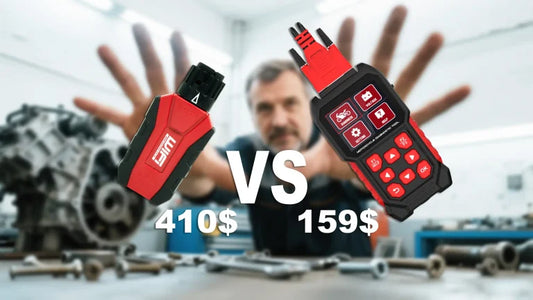
The FXTUL M4-Duc is a specialized diagnostic tool developed for Ducati motorcycles.
According to the product page, it can currently identify and diagnose various Ducati ABS systems, including specific Bosch 5M, 8M, 9M, 9MP, and 9.1MP control units. Depending on the specific model and system configuration, it offers the following capabilities:
• Reading ABS fault codes
• Clearing fault codes after maintenance
• Viewing ABS control unit information
• Reading relevant live data
• Performing actuation tests on supported components
• Executing the ABS bleeding function on compatible models
The general inspection procedure is as follows:
1. Ensure the motorcycle is parked securely and protect the bodywork/paint.
2. Check the battery voltage; connect a stable power supply if necessary.
3. Locate the diagnostic port and connect the appropriate adapter cable.
4. Turn on the ignition but do not start the engine.
5. Select "Ducati" on the device and identify the vehicle via VIN or correct model information.
6. Enter the ABS control system.
7. Read and record fault codes first.
8. Check live data and the communication status of the ABS system.
9. Confirm whether the device offers the ABS bleeding function for that specific model.
10. Follow the service manual and on-screen prompts to complete subsequent operations.
11. After completion, re-read fault codes and check brake feel, brake fluid levels, and for any leaks.
The diagnostic tool can control the ABS pump and solenoid valves, but it cannot repair brake line leaks, master cylinder damage, caliper faults, or other mechanical issues.
Does the FXTUL M4-Duc support ABS bleeding for all Ducati models?
You cannot assume a specific function is available simply because the tool "supports Ducati."
"Reading ABS fault codes" and "performing automatic ABS bleeding" are functions at different levels. A specific model might support ABS diagnostics but not necessarily allow ABS pump bleeding services. Feature support generally depends on:
• Specific vehicle model
• Year of manufacture
• ABS control unit model
• Market version
• Diagnostic software version
• Installed hardware configuration
For example, FXTUL product FAQs note that while some older Ducati models support ABS fault code reading and data viewing, they do not currently support specific ABS service functions.
Before purchasing, it is recommended to provide FXTUL with the following information:
• Full motorcycle model
• Year of manufacture
• First few digits of the VIN or the market version
• Front wheel, rear wheel, or full braking system configuration
• Whether "ABS fault diagnosis" or "ABS pump bleeding" is required
Providing this information helps avoid situations where the desired function is found to be incompatible after purchase.
Safety Precautions for Ducati ABS Brake System Bleeding
The braking system directly affects riding safety. Observe the following precautions during the procedure:
• Use the brake fluid specified in the owner's manual; while many Ducati models use DOT 4, always refer to the specific model requirements.
• Do not mix DOT 5 silicone-based brake fluid with other types.
• Brake fluid can damage paint and certain surfaces; take appropriate protective measures beforehand.
• Do not allow the fluid level in the reservoir to drop too low during the bleeding process.
• Do not reuse old brake fluid that has been bled from the system.
• Do not arbitrarily loosen the lines connected to the ABS hydraulic control unit.
• Follow the service manual for the correct bleeding sequence for the front and rear brake circuits.
• Upon completion, check all connections, bleed screws, and the reservoir for leaks.
• Do not perform a road test until proper pressure at the lever or pedal is confirmed.
• Conduct the initial test in a safe, enclosed area at low speed.
Ducati officially recommends that maintenance be performed by qualified personnel in accordance with the specific requirements outlined in the vehicle manual. Ducati Customer Service
FAQ
Is automatic ABS bleeding required every time the Ducati brake fluid is changed?
Not necessarily. If the reservoir does not run dry and no air enters the ABS module during the replacement process, some models can be bled using standard procedures. The decision should be based on the specific model's service manual and the final brake feel.
Does a "soft" rear brake on a Ducati always indicate air in the ABS module?
Not necessarily. It could also be related to the master cylinder, caliper, brake lines, brake fluid, bleeding method, or component installation. A thorough inspection is required to determine the exact cause.
Can riding the bike and triggering the ABS serve as a substitute for using a diagnostic tool to bleed the system?
This method is not recommended as a standard service procedure. Intentionally triggering the ABS on the road poses safety risks, and there is no guarantee that air will be completely purged from the system. The manufacturer-specified procedure and compatible diagnostic equipment should be used.
Can a standard automotive OBD2 scanner perform ABS bleeding on a Ducati?
Generally, no. Generic OBD2 scanners are primarily designed to read engine fault codes related to emissions; they may not be able to access the Ducati ABS module, let alone activate the pump and solenoid valves.
Do fault codes need to be cleared after the ABS bleeding process?
If service-related fault codes are stored in the ABS system, they should be cleared after confirming the issue is resolved, followed by a re-scan. Clearing fault codes is not a substitute for actual repair work.
Is the FXTUL M4-Duc suitable for individual motorcycle owners?
If an owner has some experience with brake system maintenance and needs to read Ducati-specific fault codes, view data, or perform compatible service functions, the M4-Duc can reduce reliance on generic automotive scanners. However, when dealing with the ABS hydraulic system, one should still possess the proper tools, service documentation, and the ability to perform the work safely.
Summary: Does a Ducati actually require ABS system bleeding?
Ducati motorcycles do not require frequent ABS pump bleeding simply because they are equipped with ABS.
Special attention is usually required only in the following situations:
• The brake lever or pedal consistently feels spongy
• Brake lines, calipers, or the master cylinder have been removed
• The ABS hydraulic unit has been serviced or replaced
• The brake fluid system has been completely drained
• Brake feel is not restored after standard bleeding
• The specific model's service procedure explicitly requires activating the ABS pump
The correct procedure is:
Inspect the brake system → Read ABS fault codes → Perform standard bleeding → Activate the ABS pump as required by the model → Bleed and inspect again → Test after confirming there are no leaks.
If you need to diagnose Ducati ABS faults or perform the ABS bleeding function on compatible models, consider the FXTUL M4-Duc Ducati diagnostic tool.
Before purchasing, please provide the specific model, year, and required functions so that FXTUL can confirm compatibility for ABS diagnostics and bleeding.