
I. What Is ABS on Motorcycles?
ABS, short for Anti-lock Braking System, is a safety system designed to prevent wheels from locking up during emergency braking.
Its primary functions are:
• Preventing tire lockup and skidding
• Improving braking stability
• Shorten braking distance (under most road conditions)
Today, ABS has become standard equipment on many mid- to high-end motorcycles, and in some countries, it is even a mandatory requirement.
II. Where is ABS typically located on a motorcycle?
A motorcycle's ABS system is not a single component but consists of several parts, primarily including:
• ABS control module (pump): Typically mounted inside the frame, near the fuel tank or engine
• Wheel speed sensors: Installed near the front and rear wheels
• Brake line connection system: Connects the brake pump to the calipers
👉 Generally, the ABS pump is hidden inside the frame or under plastic covers and is not directly exposed.
III. Why Can’t You Find the ABS System on a Honda Motorcycle?
Many people have trouble locating the ABS system when servicing Honda motorcycles. The main reasons are as follows:
1️⃣ Highly Concealed Design
Honda prioritizes the vehicle’s compactness and aesthetics in its design. The ABS module is typically:
• Mounted beneath the fuel tank
• Or hidden in the middle of the frame
👉 It’s difficult to see directly without removing the body panels
2️⃣ High Degree of Integration
Some Honda models use integrated ABS modules that combine:
• The control unit
• And the hydraulic pump
into a single unit, making it smaller but also harder to identify.
3️⃣ Different Configurations Across Models
Not all Honda motorcycles have a clearly visible ABS module. For example:
• Entry-level models may only have single-channel ABS
• Some lower-spec models may not have ABS at all
👉 So if you “can’t find it,” it could be because:
• It’s hidden
• Or the model isn’t equipped with it at all
4️⃣ No exposed ports
Unlike cars, many motorcycle ABS systems:
• Don’t have obvious external diagnostic ports
• Or the ports are in hard-to-find locations
This also makes detection and maintenance more difficult.
IV. Can a motorcycle diagnostic tool perform ABS bleeding?
The answer is: Yes, but it depends on whether the device supports this feature.
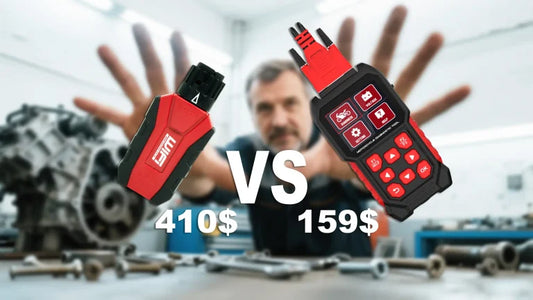
Professional motorcycle diagnostic tools (such as the FXTUL Motorcycle Diagnostic Tool) typically offer the following capabilities:
• Reading ABS system fault codes
• Real-time ABS data monitoring
• ABS bleeding functionality
🚀 Why is ABS bleeding important?• Air may remain trapped inside the ABS module
• Traditional manual bleeding cannot completely remove it
👉 In this case, you must use a diagnostic tool to:
• Activate the ABS pump
• Perform a circulation bleed
Otherwise, the following issues may occur:
• Brakes may feel spongy
• Braking performance may decrease
V. Conclusion
Being unable to locate the ABS system on a Honda motorcycle is actually a very common issue. The main reasons include:
• Highly concealed design
• Highly integrated modules
• Configuration differences across models
• Inconveniently located connectors
👉 For repair technicians, using a professional motorcycle diagnostic tool not only allows for quick localization of the ABS system but also enables critical operations (such as ABS bleeding), significantly improving repair efficiency and safety.
If you frequently work on Honda or other motorcycle brands, investing in a diagnostic device that supports ABS functionality is a very wise choice.