Foreword
A motorcycle that has been sitting for several weeks or months may refuse to start when you are ready to ride again. The dashboard may remain dark, the starter may only make a clicking sound, the engine may crank without starting, or it may start and immediately stall.
These symptoms do not necessarily indicate a serious engine problem. A discharged battery, corroded terminals, stale fuel, an activated safety switch, or an electronic fault code can all prevent a stored motorcycle from starting.
This guide explains how to troubleshoot a motorcycle that won’t start after sitting, beginning with the simplest checks before moving on to the battery, starter circuit, fuel system, ignition system, and motorcycle diagnostics.
Safety notice: Work in a well-ventilated area away from flames, sparks, heaters, and other ignition sources. Stop immediately if you notice leaking fuel, a swollen battery, smoke, burning smells, or overheated wiring.
Step 1: Identify What “Won’t Start” Means
Before removing parts or replacing the battery, pay attention to exactly what happens when you press the starter button.
The Dashboard Does Not Turn On
Start by checking:
- The battery charge
- Loose or corroded battery terminals
- The negative battery cable and ground connection
- The main fuse
- The ignition switch
A completely dark dashboard usually points to a power-supply problem rather than a fuel or ignition problem.
The Dashboard Turns On, but the Starter Does Nothing
Check the following:
- Is the engine stop switch in the RUN position?
- Is the transmission in neutral?
- Is the clutch lever fully pulled in?
- Is the side stand in the correct position?
- Has the immobilizer been deactivated?
- Is the starter button working properly?
Many modern motorcycles will prevent the starter motor from operating if the side stand, clutch, gear-position, or engine stop switch is in the wrong position.
You Hear Rapid Clicking
Repeated clicking usually indicates:
- A weak or discharged battery
- Loose battery terminals
- Corroded electrical connections
- A problem with the starter relay
The dashboard may still light up even when the battery cannot supply enough current to operate the starter motor.
The Engine Cranks Slowly
Slow cranking may be caused by:
- A weak battery
- Excessive resistance at the battery terminals
- A poor ground connection
- A starter motor or starter circuit problem
The Engine Cranks Normally but Does Not Start
If the starter motor turns the engine at a normal speed, focus on:
- Fuel quality and delivery
- Spark and ignition
- Air intake
- Engine sensors
- The immobilizer system
- ECU fault codes
Separating a “no-crank” condition from a “cranks but won’t start” condition will make the rest of the diagnosis much faster.
Step 2: Check the Basic Starting Conditions
Before using diagnostic equipment, confirm the simple things first.
Make sure that:
- The ignition key is in the ON position
- The engine stop switch is set to RUN
- The transmission is in neutral
- The clutch lever is fully pulled in
- The side stand position allows the engine to start
- There is actually fuel in the tank
- The key fob battery is working
- The immobilizer is not preventing startup
- The dashboard does not display “No Key,” “Immobilizer,” or a similar warning
- The motorcycle has not activated its tip-over protection
After sitting for a long time, moisture or corrosion can affect the contacts inside the side-stand, clutch, and engine stop switches.
Operate these switches several times to see whether the condition changes. Do not bypass or short-circuit a safety switch unless the procedure is specifically authorized by the motorcycle manufacturer.
Step 3: Test the Motorcycle Battery First
A weak battery is one of the most common reasons a motorcycle won’t start after sitting.
Even when the ignition is off, the clock, alarm, immobilizer, ECU memory, GPS tracker, USB charger, and other accessories may continue drawing a small amount of current. A battery left in a discharged condition may also lose capacity or develop sulfation.
Yuasa recommends using a suitable automatic battery maintainer when a motorcycle will be stored for more than 30 days. This helps prevent the battery from remaining in a discharged state. Read Yuasa’s battery maintenance recommendations.
Inspect the Battery and Connections
Before testing the battery, check whether:
- The battery case is swollen, cracked, or leaking
- The positive or negative terminal is loose
- The terminals have white, green, or blue corrosion
- The negative cable is securely connected to the frame or engine
- An aftermarket accessory may be causing a parasitic drain
Do not charge or jump-start a battery that is swollen, leaking, unusually hot, or giving off a strong odor.
Do Not Rely Only on Resting Voltage
A battery may show an acceptable voltage without a load but drop sharply when the starter motor is engaged.
The dashboard also requires far less current than the starter motor. A motorcycle can therefore have working lights and instruments while still lacking enough battery power to crank the engine.
A more complete battery assessment should include:
- Battery voltage
- Cold cranking performance
- Internal resistance
- Battery state of health
- Voltage during cranking
- Charging-system performance after the engine starts
The FXTUL BT50 Motorcycle Battery Tester offers standard battery testing, cranking testing, and charging-system testing. It can measure voltage, CCA, internal resistance, and battery health on supported 12-volt lead-acid batteries, including common AGM and gel types.
Always confirm that the tester and charger are suitable for your specific battery type.
If the battery is only discharged, recharge it with a compatible motorcycle battery charger. If it is fully charged but still fails a cranking or health test, replacement may be necessary.
Lithium motorcycle batteries require equipment designed for their specific chemistry. Do not apply lead-acid charging or testing standards to a lithium battery without checking the battery manufacturer’s instructions.
Step 4: Inspect the Fuses and Starter Circuit
If the battery passes its tests but the dashboard or starter motor still does not work, inspect the power supply and starter circuit.
Check the Main Fuse
Locate the main fuse and the fuses associated with the ignition, fuel injection, and starter circuits.
If a fuse is blown, replace it only with one of the correct rating specified by the motorcycle manufacturer.
If the replacement fuse immediately blows again, stop replacing it. A recurring blown fuse may indicate:
- A short circuit
- Water inside a connector
- Damaged wiring
- A failed electrical component
Using a higher-rated fuse can overheat the wiring and create a fire risk.
Listen to the Starter Relay
Press the starter button and listen carefully.
If there is no sound, investigate the starter button, safety switches, fuse, immobilizer, and control wiring.
A single click may indicate low battery output, poor terminal contact, a relay problem, or a fault in the starter circuit.
Rapid repeated clicking usually points to insufficient battery power or excessive resistance at the battery connections.
Do not bridge the starter relay terminals with a metal tool. This can create sparks, damage the wiring, or cause the motorcycle to move unexpectedly.
Step 5: Check the Fuel
If the starter motor cranks the engine at a normal speed but the motorcycle does not start, check the fuel supply.
Confirm That Fuel Is Actually in the Tank
Do not rely entirely on the fuel gauge. After extended storage, a level sensor may respond slowly or display an inaccurate reading.
Confirm that the tank contains enough fuel and consider how long the motorcycle has been stored.
Look for Signs of Stale Fuel
Fuel can degrade during storage. Oxidation and deposits may lead to:
- Clogged carburetor jets
- Poor fuel-injector spray patterns
- A contaminated fuel filter
- Fuel-pump problems
- Difficult cold starting
- Unstable idle
- Starting followed by immediate stalling
If the fuel has an unusual odor, color, or appearance, follow the motorcycle manufacturer’s procedure for safely removing and replacing it.
Never drain fuel in an enclosed area or near flames, heaters, electrical sparks, or other ignition sources.
Listen for the Fuel Pump
On many fuel-injected motorcycles, turning on the ignition and setting the engine stop switch to RUN causes the fuel pump to operate briefly.
If you do not hear the usual priming sound, check:
- The fuel-pump fuse
- The fuel-pump relay
- Battery voltage
- The side-stand switch
- The tip-over sensor
- Relevant ECU fault codes
Fuel-pump behavior varies by motorcycle, so consult the owner’s or service manual for the correct procedure.
Additional Checks for Carbureted Motorcycles
For a carbureted motorcycle, confirm that:
- The fuel valve is set to ON or RES
- The vacuum-operated petcock is functioning
- The choke or enrichment control is being used correctly
- Fuel is reaching the carburetor float bowl
- The pilot jet is not blocked by deposits
Carburetor and fuel-line disassembly should be performed by someone familiar with fuel-system safety.
Step 6: Inspect the Air Intake and Ignition System
A motorcycle stored for a long period may develop problems unrelated to the battery or fuel.
Moisture can affect the air filter, while insects or small animals may place debris inside the airbox. Rodents may also damage vacuum hoses and wiring.
Inspect the following:
- The condition of the air filter
- The airbox and intake opening
- Vacuum hoses
- Spark plug caps
- Ignition-coil connectors
- Sensor and ECU wiring
- Signs of rodent damage
A wet or severely blocked air filter can restrict airflow and make the engine difficult to start.
Spark plugs may provide useful information about combustion and fuel delivery. However, an ignition system produces high voltage. Do not hold a spark plug, ignition coil, or high-tension lead while cranking the engine.
If you are unfamiliar with safe spark testing, leave this step to a qualified technician.
Step 7: Scan the Motorcycle for Fault Codes
If the basic checks do not reveal the cause, or if the check-engine or immobilizer warning remains illuminated, connect a compatible motorcycle diagnostic scanner.
A scan tool can help determine:
- Whether the ECU is communicating
- Which current or stored trouble codes are present
- Whether the crankshaft-position sensor is producing a signal
- What the throttle-position and temperature sensors are reporting
- Whether the fuel-pump circuit has recorded a fault
- Whether the immobilizer system is preventing startup
- Whether another control module has detected an error
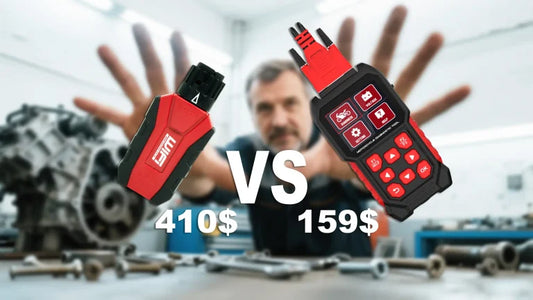
Depending on the model, FXTUL motorcycle diagnostic tools provide functions such as reading and clearing fault codes, viewing live data, scanning vehicle systems, and performing supported actuator tests.
The FXTUL M4 Motorcycle Diagnostic Tool supports voltage detection and diagnostic functions for its listed motorcycle brands.
For professional users and workshops that service multiple brands, the FXTUL M7 Multi-Brand Motorcycle Diagnostic Tool provides broader motorcycle coverage and multi-system diagnostic capabilities.
Compatibility depends on the motorcycle’s brand, model, year, market version, control systems, and requested function. Confirm support before purchasing a diagnostic tool or adapter cable.
Do Not Clear the Codes Immediately
When a diagnostic trouble code appears:
- Record the complete code.
- Save the fault description.
- Review the freeze-frame and related live data.
- Take photos of the dashboard and diagnostic screen.
- Investigate the fault using the correct service information.
- Repair the underlying problem.
- Clear the code only after completing the repair.
- Restart the motorcycle and check whether the code returns.
Clearing a fault code will not repair a failed battery, damaged wire, defective sensor, or fuel-system problem. It may also erase valuable diagnostic information.
Step 8: Continue Testing After the Engine Starts
Getting the engine running does not necessarily mean the original problem has been solved.
After startup, verify:
- The battery is receiving a proper charge
- Charging voltage meets the manufacturer’s specification
- The stator and regulator-rectifier are working correctly
- There is no excessive parasitic current draw
- The check-engine light turns off as expected
- The engine idles normally
- There are no fuel, oil, or coolant leaks
The charging test on the FXTUL BT50 can assist with evaluating charging-system performance during idle, electrical load, and engine-speed changes.
If a new or recently charged battery becomes discharged again, investigate the charging system and parasitic drain instead of repeatedly recharging the battery.
Before riding, also inspect the tires, brakes, fluid levels, chain or belt, steering, and lights. Extended storage affects more than the starting system.
When Should You Stop Troubleshooting?
Stop working and contact a qualified motorcycle technician if you discover:
- A swollen, leaking, smoking, or overheated battery
- Burned wiring or a strong electrical smell
- A fuel leak
- A replacement fuse that immediately blows again
- An engine that appears mechanically locked
- Abnormal knocking or impact noises
- An immobilizer that remains locked
- Fault codes related to the ECU, crankshaft sensor, ignition system, or communication network
- A repair that requires tools or service information you do not have
Continuing to crank the engine or repeatedly replacing fuses may cause additional damage.
How to Prevent Starting Problems After Storage
Before storing a motorcycle for several weeks or months:
- Fully charge the battery
- Use a battery maintainer compatible with the battery type
- Do not leave the battery in a discharged condition
- Disconnect or turn off unnecessary accessories
- Prepare the fuel system according to the manufacturer’s instructions
- Treat or replace fuel when appropriate
- Drain carburetor float bowls if the service manual recommends it
- Store the motorcycle in a dry environment
- Keep electrical terminals and connectors clean
- Protect the intake and exhaust from pests
- Record any existing diagnostic trouble codes
- Check tires, brakes, fluids, and the drive system before returning to the road
Starting a stored motorcycle for only a few minutes is generally not a substitute for correct battery maintenance. A suitable smart battery maintainer is often more effective than occasional short periods of idling.
Frequently Asked Questions
Why Won’t My Motorcycle Start After Sitting for a Month?
The battery should be your first check. The clock, immobilizer, alarm, and aftermarket accessories may continue drawing power while the motorcycle is parked.
A month of storage may also expose an already aging battery that no longer has enough capacity to operate the starter motor.
Why Do the Lights Work if the Battery Is Too Weak to Start the Motorcycle?
Lights and instruments require much less current than the starter motor.
A weak battery may produce enough voltage to illuminate the dashboard but fail when subjected to the much heavier starter load. A battery health and cranking test provides more useful information than dashboard brightness alone.
If the Motorcycle Starts With a Jump, Does It Only Need Charging?
Not necessarily.
After jump-starting the motorcycle, test the battery and charging system. If the battery quickly becomes discharged again, the underlying cause may be:
- An aging battery
- A charging-system fault
- A parasitic electrical drain
- Loose or corroded connections
If the Engine Cranks Normally but Won’t Start, Is the Battery Still the Problem?
It is less likely, but it cannot be ruled out completely.
When the engine cranks at a normal speed, focus on stale fuel, fuel-pump operation, ignition, sensors, the immobilizer, and ECU fault codes.
Should I Clear the Fault Codes Before Trying to Start the Motorcycle Again?
Record the codes and relevant data first.
Clearing codes does not fix the underlying fault, and it may remove information that could help identify the cause of the no-start condition.
Final Checklist
When a motorcycle won’t start after sitting, avoid replacing parts based on guesswork. Work through the problem in a logical order:
- Check the key, engine stop switch, neutral position, clutch, and side stand.
- Inspect the battery, terminals, ground cable, and fuses.
- Determine whether the engine does not crank or cranks but will not start.
- Check fuel quality, fuel delivery, air intake, and ignition.
- Use a compatible motorcycle diagnostic tool to read and save fault codes.
- After startup, test the battery and charging system.
- Stop immediately if you discover a fuel leak, electrical overheating, or a mechanical problem.
Using a battery tester and a compatible motorcycle diagnostic scanner can turn a frustrating no-start situation into a structured, data-based diagnosis.
Before purchasing an FXTUL diagnostic tool, provide the motorcycle’s brand, model, year, market version, VIN, and required diagnostic functions. This makes it easier to confirm the appropriate scanner and adapter cable for the motorcycle.